WhatsAppCall

24/7 Emergency Plumbing • Plumbing, geysers & solar geyser solutions

Blocked drain cleaning

Blocked drain cleaning for sinks, showers, gullies and main drain lines.

When a drain slows down, smells, gurgles or overflows, the important step is to identify the affected line before the blockage spreads into another fixture.

Plumb A Nator clears domestic and business drain blockages across kitchen waste lines, bathroom outlets, shower traps, outside gullies, inspection points and main drain runs. Each call starts by locating the affected line, checking the likely access point and choosing a clearing method that restores flow without unnecessary disruption.

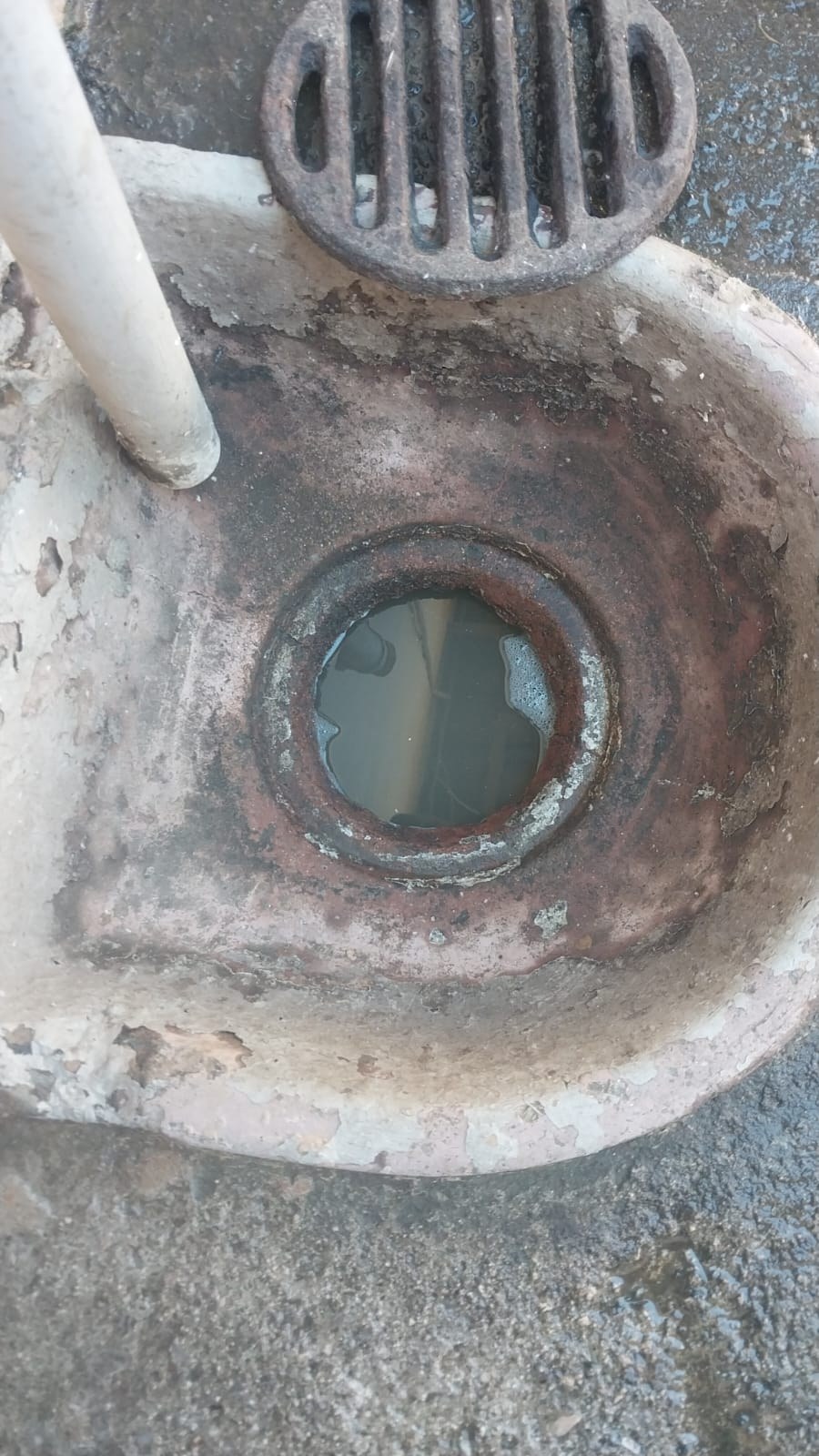
Blocked drain cleaning showing an outside drain opening with standing wastewater during plumbing inspection by Plumb A Nator.
Blocked drain cleaning image showing the outside drain opening during inspection and cleaning work.
Blocked drain help line 067 139 9980 Tell us which fixture is affected, whether more than one drain is slow, where water is backing up, and whether the same drain has blocked before.
Request Drain Cleaning
Kitchen Drains Bathroom Drains Outside Gullies Main Drain Restrictions
Slow Drain Flow Gurgling Waste Lines Outside Gully Overflow Recurring Drain Smells Main Line Restrictions

Drain fault diagnosis

Blocked drain cleaning starts by finding where the restriction sits.

A sink trap, shower waste, bathroom branch line, outside gully and main drain run do not block for the same reason. The right clearing method depends on the access point, the material in the line, the direction of flow and whether more than one fixture is affected.

Quick details that help before arrival

Useful drain details include the affected room or outside area, whether water rises from another outlet when a tap runs, whether the toilet bubbles, whether a gully is overflowing, and whether a smell returns after water has drained away.

Before the drain team arrives

Stop feeding water into the blocked line and keep the drain access visible.

For a sink, shower, toilet or outside gully backup, the most useful step is to stop extra water entering the affected line. Do not run the dishwasher, washing machine, bath, shower or nearby sink if that water is feeding the same waste route.

Keep the affected outlet unused

If the kitchen sink is holding water, avoid running taps into that bowl. If a toilet bubbles or an outside gully rises when another fixture drains, pause water use on that side of the property until the line is checked.

Show the nearest access points

Clear a path to the affected gully, sink cupboard or inspection eye so drain machinery can be positioned quickly without obstruction. Photos of the gully, waste outlet and any standing water help identify whether the blockage is internal, outside or on the main run.

Keep wastewater contained

Use towels or a bucket only to control spreading water around the drain area. Keep children and pets away from overflowed gullies or sewer water because the residue can be unsafe and unpleasant to clean.

Avoid chemical drain cleaners

Strong drain liquids can remain trapped behind the blockage. When the line is opened, that chemical water can splash from the trap, gully or waste point and make mechanical clearing more difficult.

How the blocked drain visit is handled

Every step is aimed at restoring drain flow without treating the job like a general plumbing call.

The visit is guided by the drain route: the fixture waste, the branch line, the outside gully, the rodding eye or the 110mm main run. That keeps the work focused on the blockage point instead of replacing parts that are not causing the restriction.

1. Start with the drain symptom

Tell us whether the problem is a slow sink, shower pooling, toilet bubbling, gully overflow, sewer smell or repeat backup. The pattern helps narrow down whether the restriction is in a 40mm waste, a kitchen branch, an outside gully trap or the main drain line.

2. Trace the likely access point

The first check is the safest place to enter the line, such as a trap, waste outlet, inspection cover, rodding eye or external drain opening. Choosing the right entry point reduces mess and helps the clearing cable or rods work in the correct direction.

3. Clear the blockage by line type

Grease-heavy kitchen wastes, hair-filled bathroom drains, silted gullies and root-affected main runs do not clear the same way. The clearing method is matched to the pipe size, blockage material, access and whether wastewater is already backing up.

4. Flush, test and clean the entry point

After the restriction is opened, the line is flushed and tested so water movement can be checked through the affected route. The drain entry point is cleaned down to reduce residue, odour and leftover debris around the working area.

Blocked drain cleaning service

Focused drain clearing for common domestic and commercial blockages.

Blocked drains behave differently depending on where the restriction sits. A kitchen waste line, shower trap, outside gully and main drain run each needs a different clearing approach, so the work starts by matching the symptom to the most likely blockage point.

Kitchen drain blockages

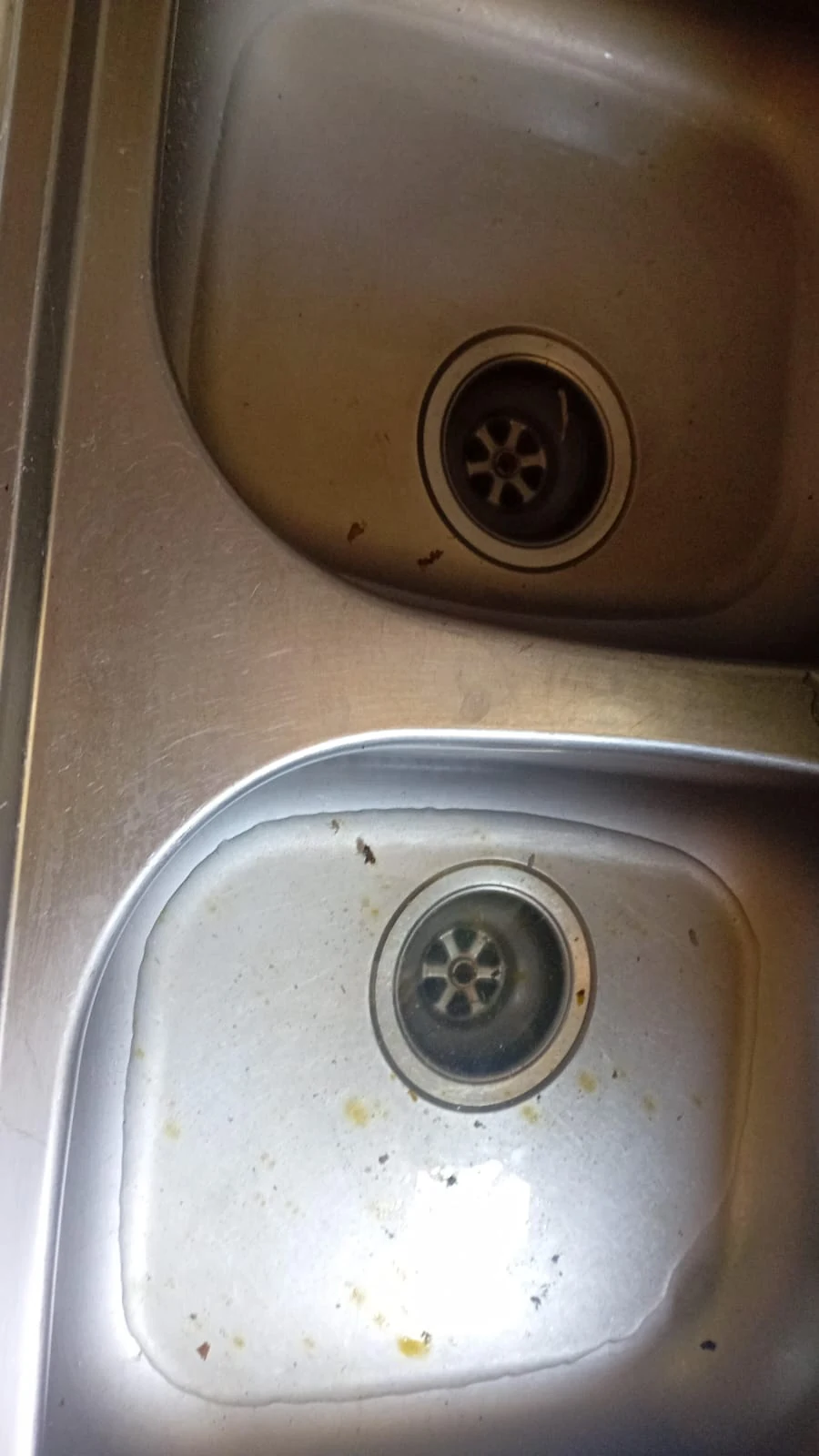
Double kitchen sink with standing water showing a blocked kitchen drain.
Blocked kitchen sink drainage causing water to stand in the basin.

Kitchen drains often slow down because grease, oil, food residue, soap and fine debris collect inside the trap or waste line. A blockage may start as a slow sink and later become a complete backup into the bowl or cupboard area below.

What to look for: Slow sink drainage, bubbling from the waste, bad smells under the sink, water standing in the bowl or leaks around the trap after repeated plunging.

Cleaning approach: The trap and waste route are checked first, then the branch line is cleared through the safest access point if the blockage is deeper than the trap.

Ask about kitchen drain cleaning

Bathroom and shower drain blockages

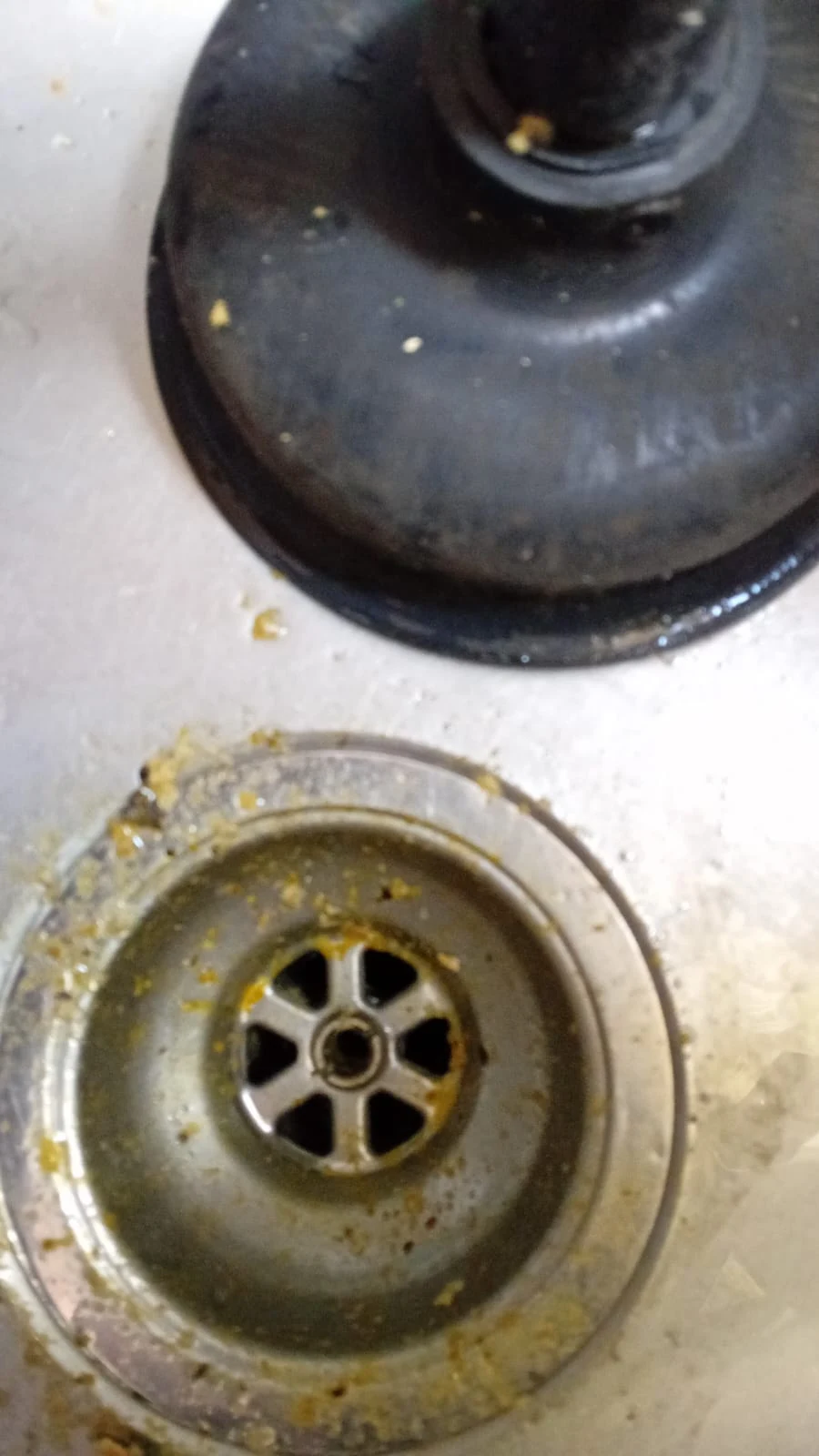
Close-up of a blocked waste outlet with residue around the drain opening.
Blocked waste outlet with visible residue around the drain point.

Bathroom drain blockages are commonly linked to hair, soap residue, scale and small debris that collect in the waste outlet or branch line. Shower drains can also show a problem when water pools around the waste before slowly dropping away.

What to look for: Water pooling in the shower, basin waste gurgling, drain smells after use, slow bath drainage or water movement between nearby bathroom fixtures.

Cleaning approach: The waste outlet is checked without damaging finishes, then the line is cleared according to the access available behind the trap, waste point or inspection opening.

Ask about bathroom drain cleaning

Outside gully overflow

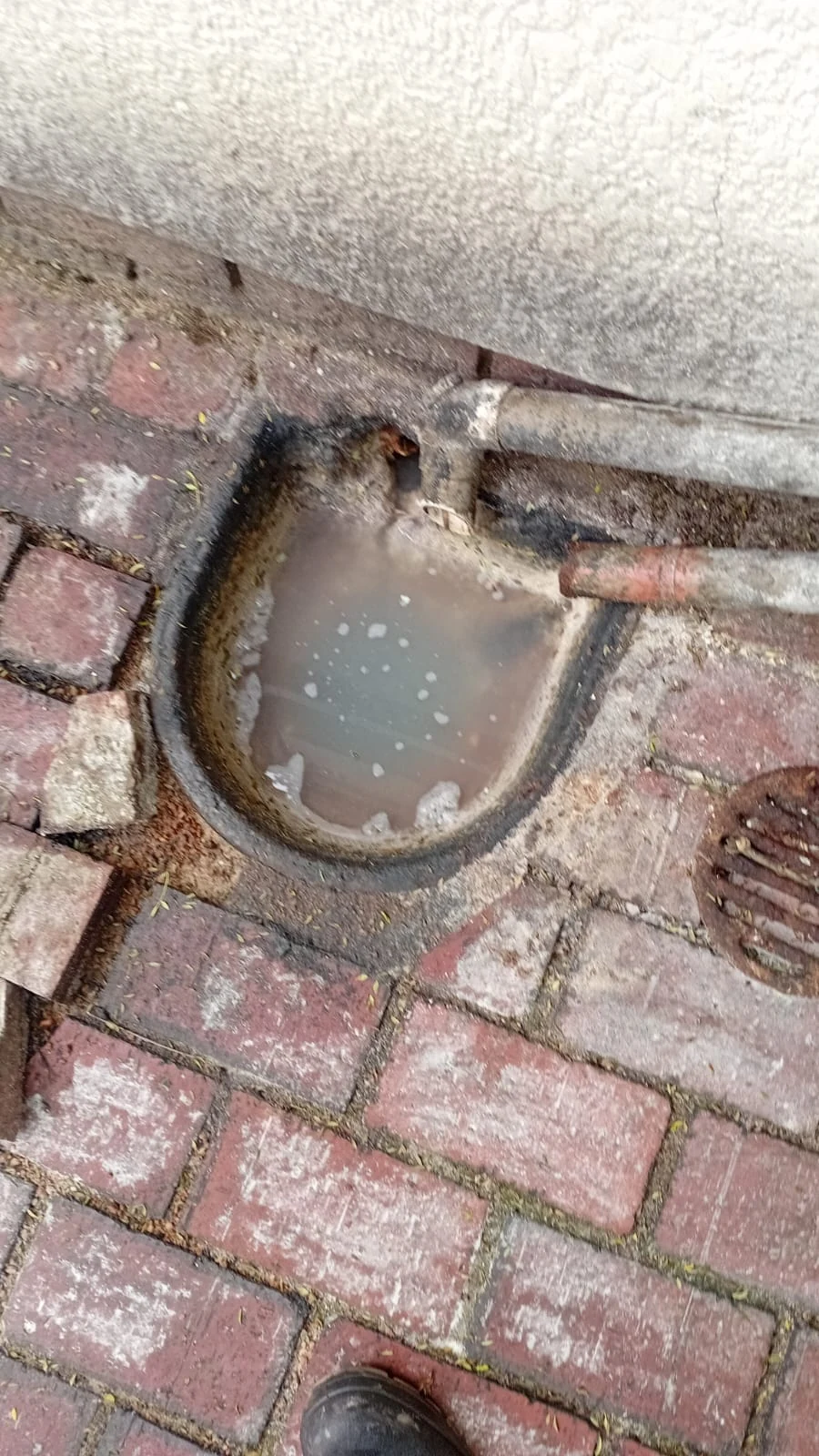
Outside gully overflowing with dirty standing water beside paving.
Outside gully overflow showing backed-up dirty water at ground level.

An outside gully can overflow when waste water cannot move away from the property fast enough. This may involve leaves, sand, grease, roots, a blocked inspection point or a restriction further along the main drain route.

What to look for: Waste water rising outside, strong drain odours, water appearing after kitchen or bathroom use, or outside overflow that returns after short-term clearing.

Cleaning approach: The gully, nearby inspection points and downstream route are checked so the line can be cleared in the correct direction rather than only scooping out surface water.

Ask about gully overflow cleaning

Main drain restrictions

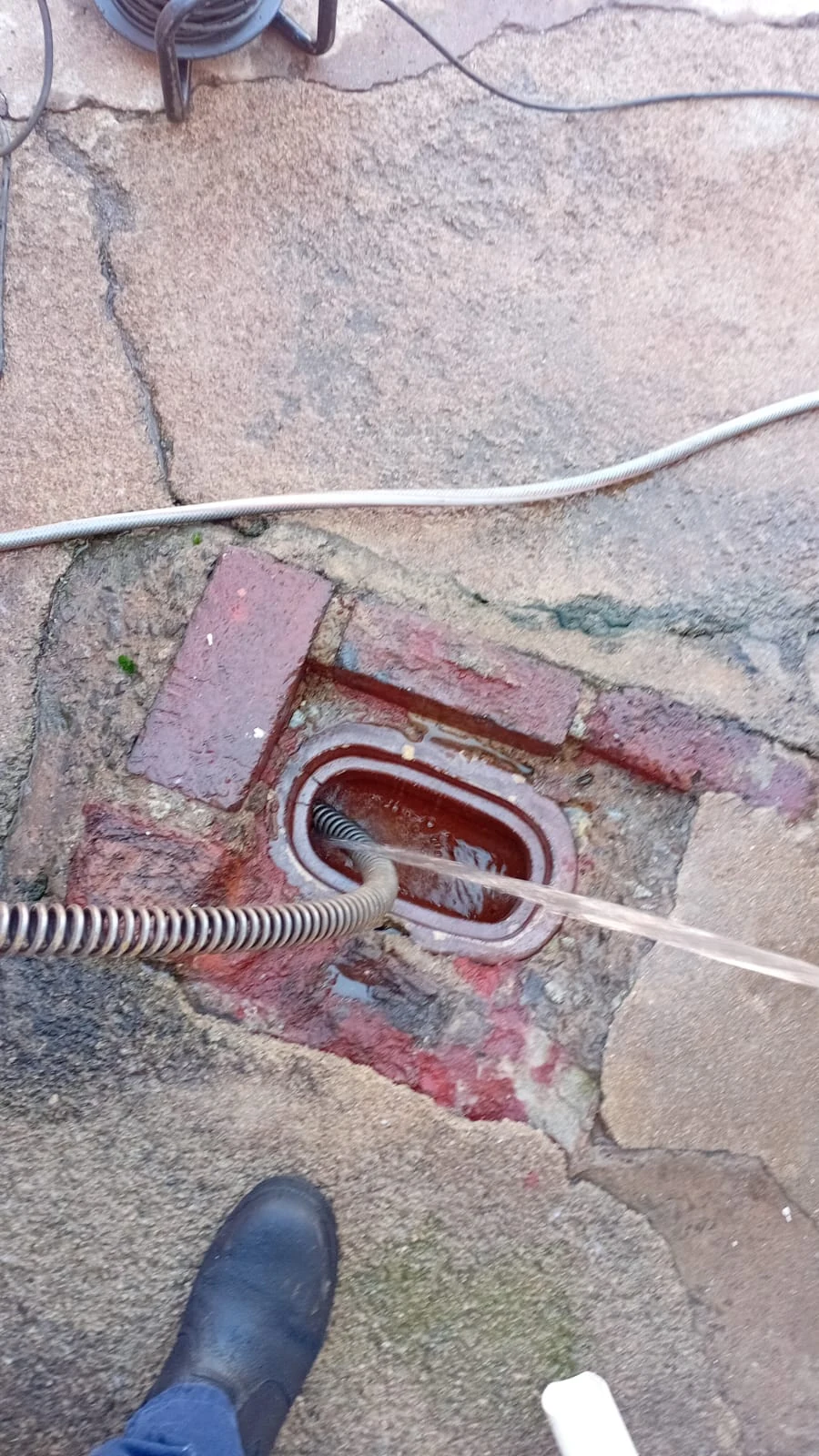
Drain cleaning cable clearing a main outside drain through an inspection opening.
Main drain cleaning in progress through an outside inspection opening.

A main drain restriction is more serious because several fixtures may be connected to the same line. When toilets, showers, basins and gullies react together, the blockage may be deeper than a single fixture waste.

What to look for: More than one slow fixture, toilet bubbling, outside overflow, sewage smells, repeated blockages or water pushing up when another outlet is used.

Cleaning approach: The affected run is traced through accessible inspection points, then cleared with the method suited to the obstruction and pipe condition.

Ask about main drain cleaning

Drain cleaning process

Drain clearing is matched to the pipe diameter, access point and blockage material.

A 40mm basin waste, shower waste, kitchen branch line, outside gully and 110mm main drain all behave differently. The clearing route is chosen from the symptom, the nearest safe access point, the pipe diameter and the type of material likely sitting in the line.

01

Locate the blocked section

The first check is whether the restriction sits in a trap, a 40mm internal waste, a kitchen branch line, an outside gully, or a 110mm sewer run serving several fixtures.

02

Open the safest drain access

The entry point may be a sink trap, waste outlet, rodding eye, gully pot or inspection opening. Using the correct access helps protect finishes and avoids pushing waste into the wrong branch.

03

Clear the material causing the restriction

Grease, hair, wipes, silt, roots and compacted waste are handled differently. Depending on the line, the work may use hand tools, rods, a drain cable machine or jetting where access and pipe condition allow it.

04

Flush the line and clean the drain entry point

We thoroughly flush the cleared line to confirm full flow, then clean the drain entry point so waste residue, splash marks and odour are not left around the working area.

What causes blocked drains

Most drain blockages build up before they become urgent.

A blocked drain can be caused by a single object, but many call-outs are the result of gradual build-up in the waste line. Knowing the likely cause helps decide whether a simple clean is enough or whether the pipe route should be inspected further.

Grease and food waste

Kitchen grease cools inside the pipe and catches food particles, coffee grounds and fine waste. Over time this narrows the line until normal sink use becomes slow or blocked.

Hair, soap and scale

Bathroom outlets collect hair and soap residue around strainers, traps and bends. This can create slow shower drainage, basin smells and recurring bathroom waste blockages.

Roots, sand and outside debris

External drains can collect soil, leaves, roots and sand, especially around gullies and damaged pipe joints. These blockages often return when the pipe condition is not checked.

Poor fall or damaged pipework

If a pipe has poor fall, a low point, a collapsed section or a displaced joint, clearing may only give temporary relief. Repeat symptoms should be treated as a sign to investigate further.

Blocked drain prevention

Small daily habits help stop fat, wipes and debris from turning into repeat blockages.

Prevention is especially important on older South African domestic drain lines where kitchen waste, bathroom waste and outside gullies can share tight bends, older pipe routes and limited rodding access.

Keep fats and oils out of kitchen wastes

Do not pour cooking oil, meat fat, pan grease, gravy or sauce residue into the sink. Wipe pots and pans into the bin first, because warm fat cools inside the pipe and traps food particles.

Do not flush wipes or hygiene products

Wet wipes, cotton pads, earbuds, sanitary products and paper towel do not break down like toilet paper. They can catch inside bends, inspection points and 110mm sewer lines, especially when roots or scale are already present.

Protect shower and basin outlets

Use strainers where practical and remove hair before it enters the waste. Hair mixed with soap, toothpaste and shaving residue can form a tight plug in 40mm basin, bath and shower waste lines.

Keep outside gullies clear

Leaves, sand, soil, building rubble and garden debris should be kept away from gullies and inspection openings. Outside debris can combine with kitchen grease inside the downstream run and reduce flow through the main drain.

Blocked drain service areas

Blocked drain cleaning for homes, complexes, shops and business premises.

When you contact us, mention the area, property type, affected drain and whether the blockage is inside, outside or affecting more than one fixture.

Blocked drain cleaning FAQ

Practical answers before you book drain cleaning.

Blocked drains can start with one slow outlet and quickly move into gullies, toilets, showers or kitchen waste lines. These answers explain what the signs usually mean, what to send before booking, and when the blockage may need more than a basic clearing attempt.

When does a blocked drain need same-day attention?

A blocked drain needs same-day attention when water is backing up into showers, sinks or toilets, when an outside gully is overflowing, or when foul water is starting to spread across floors, paving or passages. Multiple affected fixtures usually mean the restriction is deeper in the line than a simple trap blockage.

What are the first signs of a developing drain blockage?

The early signs are usually slow draining, gurgling after water runs away, a bad smell near waste points, or water levels that rise before they drop. Those symptoms often show up before a full blockage forms, especially in kitchen wastes, shower lines and outside gullies.

What usually causes blocked kitchen drains?

Kitchen drains commonly block because grease, oils, soap residue and food solids cool inside the pipe and start collecting other debris. Over time the bore narrows, flow slows down and the line begins to hold waste water instead of carrying it away properly.

Why do shower and bath drains block so often?

Shower and bath drains often collect hair, soap scum, lint and body-product residue. These materials tangle together around the waste opening and further down the trap, where they gradually reduce flow and eventually stop the line from clearing normally.

What does it mean if more than one drain is blocked at the same time?

If more than one fixture is slow or backing up, the restriction is often lower down the shared branch or main drain line. That usually points to a deeper issue than a single sink or shower trap, and it may involve an outside gully, inspection eye, root intrusion or a main sewer run.

Is drain cleaning different from sewer line repair?

Yes. Drain cleaning focuses on removing the obstruction and restoring flow, while sewer line repair deals with damaged pipework such as breaks, collapsed sections, displaced joints or root entry points. A drain that keeps blocking after cleaning may need the pipe condition checked, not only the blockage removed.

Should I pour acid or chemical cleaner into a blocked drain?

That is usually not the best first step. Strong drain chemicals can sit in the line if the blockage is severe, which can complicate the work, create fumes, and increase the risk of splashes when the drain is opened. Mechanical clearing and proper diagnosis are usually safer and more useful.

What tools are used for blocked drain cleaning?

The tools depend on the type and position of the blockage. Common options include hand tools for traps, drain rods, power snakes or cleaning cables for internal restrictions, and higher-capacity clearing equipment for outside drain lines and repeated blockages. A 40mm basin or shower waste is approached differently from a 110mm main sewer line, so access and pipe size matter.

Can tree roots cause repeated drain blockages?

Yes. Tree roots often enter older drains through small joint gaps or damaged sections, then trap paper, grease and other solids flowing through the pipe. The drain may clear temporarily, but repeat blockages are common until the root entry point and pipe condition are properly addressed.

Why is my outside gully overflowing?

An overflowing outside gully often means water cannot get past a blockage further down the line. The restriction may be in the gully trap, branch drain or main run. Gullies also overflow when grease, silt, leaves, roots or waste build-up stop the wastewater from moving away fast enough.

What information should I send before booking blocked drain cleaning?

Send a photo of the affected drain or fixture, a picture of the nearest outside gully or inspection point if visible, and a short message explaining what is happening. It also helps to say whether the problem is recent or repeated, and whether only one fixture or several are affected.

Can a blocked drain create smells inside the house?

Yes. A partial blockage can trap dirty water and waste in the pipe, which often leads to foul smells near sinks, showers, basins, floor drains or outside gullies. Smells are especially common when the blockage is holding stagnant water or when venting and flow are disturbed by the restriction.

How can I reduce the chance of future drain blockages?

Do not wash grease, oils or food scraps into kitchen wastes, use strainers where practical, and keep hair and heavy soap residue out of shower and bath drains. Outside gullies should also be kept clear of leaves, silt and loose debris so wastewater can move away without obstruction.

What if the drain blocks again soon after it was cleared?

A quick repeat blockage usually means the original cause is still there or the line has an underlying condition such as grease scaling, root intrusion, poor fall or damaged pipework. Recurrent blockages need a more careful look at the full drain route instead of treating each blockage as a separate event.

Do you clean blocked drains for homes and commercial properties?

Yes. Blocked drain cleaning can be carried out for domestic properties, offices, shops and other commercial spaces. The important part is to identify the affected line, the type of blockage and how urgently the blockage is disrupting normal use at the property.
Meet the team

Real people behind the call, the repair and the follow-up.

A strong service team is built from different skills: plumbers, electricians, leak-detection support, solar geyser technicians and appliance specialists. Together, the team helps customers move from panic to a clear plan, whether the work is urgent, planned or part of a larger repair.

Daniso Chitanda, Plumber and Electrician at Plumb A Nator

Daniso Chitanda

Plumber and Electrician

Supports customers with practical plumbing and electrical fault-finding where water, geysers and connected services need careful coordination.

Jeffrey Shabangu, Plumber at Plumb A Nator

Jeffrey Shabangu

Plumber

Handles day-to-day repairs, urgent water problems, geyser faults, pipework and general service calls with a focus on neat, reliable workmanship.

Jerico Ndebele, Electrician at Plumb A Nator

Jerico Ndebele

Electrician

Assists with electrical checks and support where geysers, appliances, pumps or related systems need safe electrical attention.

Lawrence Diago, Leak Detector at Plumb A Nator

Lawrence Diago

Leak Detector

Focuses on tracing hidden leaks, pressure concerns and water-loss symptoms so repairs can be targeted with less unnecessary disruption.

Lucky Ncube, Plumber at Plumb A Nator

Lucky Ncube

Plumber

Handles day-to-day repairs, urgent water problems, geyser faults, pipework and general service calls with a focus on neat, reliable workmanship.

Marco Moyo, Solar Plumber at Plumb A Nator

Marco Moyo

Solar Plumber

Assists with solar geyser repairs, roof-mounted system checks, hot-water upgrades and practical guidance around repair or replacement options.

Mailot Mpanza, Appliance Technician at Plumb A Nator

Mailot Mpanza

Appliance Technician

Supports appliance-related service calls where water connections, drainage, electrical checks or customer troubleshooting are involved.

Mkhululi Dube, Electrician at Plumb A Nator

Mkhululi Dube

Electrician

Assists with electrical checks and support where geysers, appliances, pumps or related systems need safe electrical attention.

Methias Ndlovu, Plumber at Plumb A Nator

Methias Ndlovu

Plumber

Handles day-to-day repairs, urgent water problems, geyser faults, pipework and general service calls with a focus on neat, reliable workmanship.

Marvelous Nyathi, Plumber at Plumb A Nator

Marvelous Nyathi

Plumber

Handles day-to-day repairs, urgent water problems, geyser faults, pipework and general service calls with a focus on neat, reliable workmanship.

Que Gumpo, Plumber and Electrician at Plumb A Nator

Que Gumpo

Plumber and Electrician

Supports customers with practical plumbing and electrical fault-finding where water, geysers and connected services need careful coordination.

Polite Nkomo, Solar Plumber at Plumb A Nator

Polite Nkomo

Solar Plumber

Assists with solar geyser repairs, roof-mounted system checks, hot-water upgrades and practical guidance around repair or replacement options.

Thulani Shabangu, Electrician at Plumb A Nator

Thulani Shabangu

Electrician

Assists with electrical checks and support where geysers, appliances, pumps or related systems need safe electrical attention.

Teenage Tshabangu, Plumber at Plumb A Nator

Teenage Tshabangu

Plumber

Handles day-to-day repairs, urgent water problems, geyser faults, pipework and general service calls with a focus on neat, reliable workmanship.

Zhita Ncube, Plumber at Plumb A Nator

Zhita Ncube

Plumber

Handles day-to-day repairs, urgent water problems, geyser faults, pipework and general service calls with a focus on neat, reliable workmanship.

Comfort Malepe, Plumber at Plumb A Nator

Comfort Malepe

Plumber

Handles day-to-day repairs, urgent water problems, geyser faults, pipework and general service calls with a focus on neat, reliable workmanship.

Bongani Ndebele, Plumber at Plumb A Nator

Bongani Ndebele

Plumber

Handles day-to-day repairs, urgent water problems, geyser faults, pipework and general service calls with a focus on neat, reliable workmanship.

Blessing Chitanda, Plumber at Plumb A Nator

Blessing Chitanda

Plumber

Handles day-to-day repairs, urgent water problems, geyser faults, pipework and general service calls with a focus on neat, reliable workmanship.

Need blocked drain cleaning?

Call Plumb A Nator before the blockage spreads to another fixture.

Share the drain location, the visible symptom and whether the problem has happened before so the right clearing route can be planned.

Call 067 139 9980
Call Now WhatsApp