Visible water pipe leaks
Look for dripping joints, wet pipe insulation, stains below elbows or water that appears when pressure is restored.
Helpful hint: note whether the leak stops when a nearby isolation valve is closed.
Pipe repairs
A pipe repair should match the pipe material, pressure, access and condition of the surrounding line.
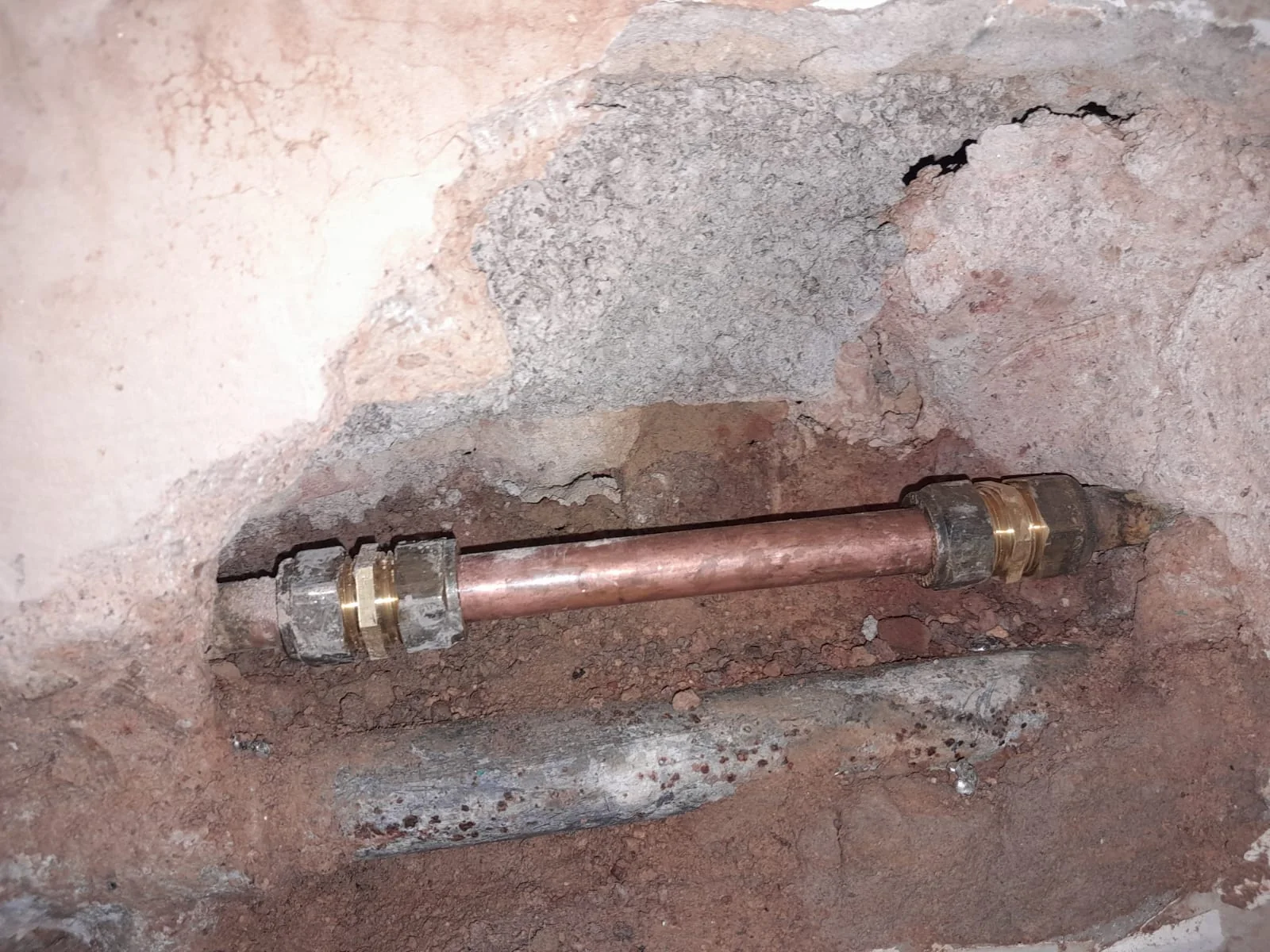
Plumb A Nator handles pipe repairs where copper, PVC, HDPE, galvanized, PEX-style or mixed pipework has started leaking, cracking, weeping or failing at a joint. This service focuses on repair decisions: locating the damaged section, checking whether the surrounding pipe can still hold a repair, selecting a suitable fitting or replacement length, and testing the line before finishes or access points are closed.
Focused service
Look for dripping joints, wet pipe insulation, stains below elbows or water that appears when pressure is restored.
Helpful hint: note whether the leak stops when a nearby isolation valve is closed.
Waste pipe leaks often appear only when a basin, shower, bath, sink or appliance drains. The meter may not move because the supply side is not leaking.
Helpful hint: run no extra water into a suspected waste leak until it is checked.
Copper can show green staining or pinhole leaks, while galvanized routes can show rust, restricted flow and brittle joints.
Helpful hint: do not keep tightening old metal fittings if the pipe looks corroded.
Plastic pipe repairs depend on diameter, pressure rating, joint type, movement and whether the pipe carries pressure or waste.
Helpful hint: keep any broken fitting pieces so the size and type can be matched.
Access should be chosen from the symptom, pipe route and closest safe opening point rather than breaking large areas blindly.
Helpful hint: send photos of both sides of the wall, cupboard or ceiling area.
A repeat leak can point to pressure, pipe age, unsupported pipework, heat movement or a weak section beyond the first drip.
Helpful hint: mention previous repairs on the same line before work starts.
Before we arrive
Do not cover or paint over damp marks before the pipe route is checked.
If water is spreading and it is safe, close the nearest valve or main stop tap and note whether the leak slows.
Photos of valves, pipe material, ceiling marks, cupboards and nearby fixtures help narrow the likely pipe route.
Visit process
Identify whether the fault is supply pipe, hot-water line, waste route or fitting related.
Check pipe material, access, surrounding condition and nearby joints.
Repair the damaged section or advise replacement/rerouting where the line is weak.
Test the repaired route and nearby joints before closing access.
Related plumbing help
Use this when water is actively escaping and immediate damage control is needed.
Helpful when repeated leaks or poor access make another small repair unwise.
Useful when the pipe leak is hidden behind walls, ceilings, floors or paving.
Important when pressure problems keep damaging pipework or fittings.
FAQ
Repair is usually suitable when the damaged section is local and the surrounding pipe is sound. Replacement becomes sensible when the route is brittle, corroded or repeatedly failing.
Pipe repairs may involve copper, PVC, HDPE, galvanized, PEX-style, waste and mixed older pipework.
Clues include where water appears, whether the meter moves, whether the damp area is warm and whether the leak changes when a valve is closed.
Often yes, when the likely route is narrowed down before opening walls, ceilings, cupboards or paving.
Keep the leak visible, clear access and close a safe isolation valve only if water is actively spreading.
Repeat leaks can mean high pressure, ageing pipe, unsupported movement, corrosion or a nearby weak joint.
Yes. High or unstable pressure can stress joints, valves, geyser lines and older pipework.
Burst pipe repair is urgent work for uncontrolled water flow. Pipe repair also covers slower leaks, worn joints and planned fixes.
Yes, but the route should be narrowed down before digging to avoid unnecessary excavation.
Yes, when access is safe and the damaged section can be reached without creating unnecessary finish damage.
Staining, rust marks, weeping, damp rings, hissing sounds and recurring water marks can indicate a weak joint.
Yes. Heat, expansion, pressure and geyser-side conditions must be considered.
Yes. Basin wastes, bath wastes, sink traps, shower outlets and branch lines can be repaired when access is suitable.
Supply lines are checked under pressure and waste lines are watched while fixtures drain.
Rerouting may be better when a line is trapped, repeatedly leaking, difficult to access or made from old failing material.
Service areas